Maximum Resting Time for Beef Roast
Appetite for Knowledge
When you bite into a piece of meat, how well you enjoy it depends upon three things: flavor, tenderness, and juiciness. Flavor and tenderness are determined by cut of meat, what kind of exercise the muscles did, fat content, the age of the animal, and cooking doneness.
Juiciness
Juiciness, on the other hand, is all about the water content of the muscle tissue, which does not vary all that much across muscle types. Meat is just naturally juicy. The trick is cooking it so that it stays that way. Overcooked meat is dry meat!
Meat is composed of protein chains made up of amino acids. Amino acids, when heated, undergo a change called denaturing, which means their basic configuration changes. In the case of cooking, the protein chains contract, exerting pressure on the water contained within the molecules. Water is not compressible, so it has to go somewhere. The non-compressible fluids will move from areas of high pressure to areas of low pressure, in this case, a lower temperature. Therefore, what happens is all the juice moves from the surface areas of the meat, to the center, where it is cooler.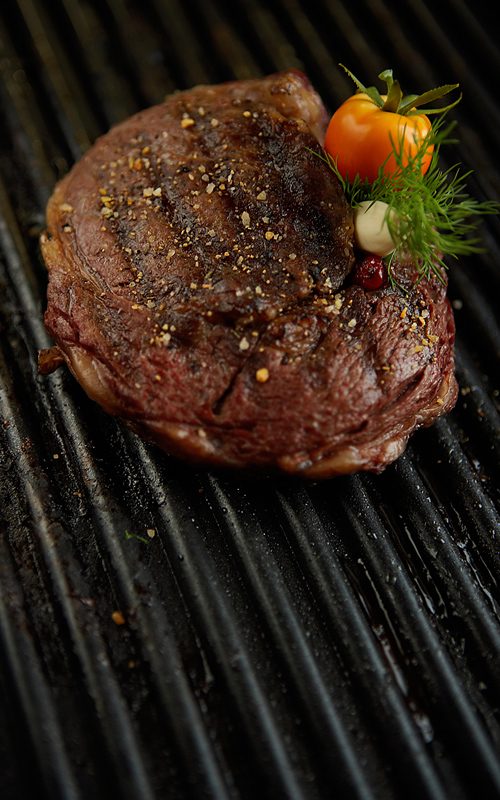
So, when the meat is removed from the heat, most of the juice is at the interior end of the protein fibers. The juice will move back to the outside of the meat, as it cools, evenly distributing the juice and flavors throughout the meat. If you then immediately slice into the muscle fibers, exposing them to cooler air, the juices will drain out. It is estimated that 15 to 20% of the flavor goes out with the juice. Simply dipping the meat in the juice as you eat will not place it back in the fibers where it belongs. The meat is permanently ruined.
Carry-Over Cooking
The internal temperature of the meat continues to rise after cooking has stopped, called carry-over cooking. Therefore, you should remove the meat from the heat prior to reaching its target doneness temperature. Test for the correct temperature by sticking the probe of a reliable instant-read thermometer or digital wireless thermometer through the side of the meat to the center for accurate results. Otherwise, it can be overcooked and a reabsorption of juices won't happen if you overcook your meat. When the meat is sliced, the juices will have a tendency to stay in the meat where they belong. You now have a moist, succulent piece of meat that has maximum flavor.
Resting
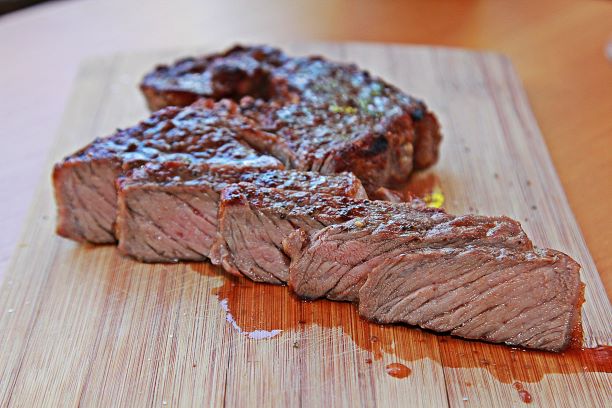
There is one more element to cooking meat. After cooking and before slicing and serving meat should be allowed to "rest" undisturbed. Remove the meat from the heat and place it on a warm serving platter. This permits the juices to be reabsorbed into the fibers of the meat. If you skip resting, you will lose most of the flavorful juices when the meat is cut. Another benefit of resting meat is that it allows the temperature of the meat to even out, so that the outside is not hotter than the inside. Resting is only necessary when you employ a high-heat cooking technique like roasting, broiling or grilling.
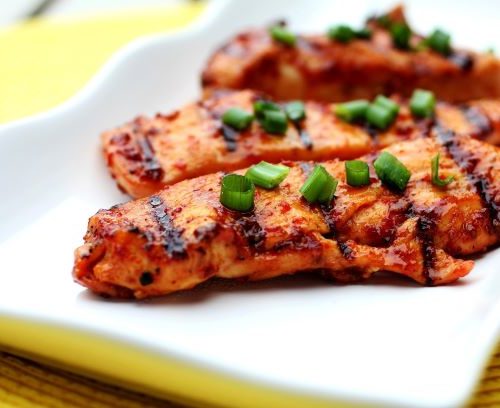 The amount of resting time depends on the size of the piece of meat, and the temperature it reached in cooking. Thin cuts of meat like fish, chicken breasts, pork chops, and burgers need about 5 minutes of rest before serving. Thicker cuts of meat like steaks should rest for 8-12 minutes per steak. For a medium-sized roast, ham, whole chicken, and turkey breast, plan on about 20 minutes. For larger roasts, including prime rib and whole turkeys, 5 minutes per pound is a good rule of thumb.
You spend time choosing the best cut of meat, seasoning it, and cooking it. It's a shame not to wait just a few minutes before serving it to be sure that your meat is as good as it can be. Allowing meat to rest after cooking helps keep it moist, which in turn means you will savor delicious tender and juicy meat. Good things come to those who wait!
Sources:
- America's Test Kitchen, americastestkitchen.com
- Serious Eats, seriouseats.com
- ThermoWorks, thermoworks.com
- USDA, usda.gov
Contact Our Expert
Email: nfs@uwyo.edu
Extension Educator:
Vicki Hayman – (307) 746-3531

Feedback Form
Follow UW Nutrition and Food Safety
Feel free to use and share this content, but please do so under the conditions of our Rules of Use. Thank You.
For more information, contact a University of Wyoming Nutrition and Food Safety Educator at nfs@uwyo.edu or Ask an Expert.
Appetite for Knowledge - Read!
Recipes - Try One Now!
Contact Our Expert
Email: nfs@uwyo.edu
Extension Educator:
Vicki Hayman – (307) 746-3531
Issued in furtherance of extension work, acts of May 8 and June 30, 1914, in cooperation with the U.S. Department of Agriculture. Kelly Crane, Director, University of Wyoming Extension, College of Agriculture and Natural Resources, University of Wyoming Extension, University of Wyoming, Laramie, Wyoming 82071.
The University of Wyoming is an equal opportunity/affirmative action institution.
Source: https://uwyoextension.org/uwnutrition/newsletters/resting-the-final-phase-of-cooking-meat/

Post a Comment for "Maximum Resting Time for Beef Roast"